
- Best hosts of 2026
- Reviews

- Website Builders
- Blog
Top Security Features Every Hosting Provider Should Offer
 Team Webhosting Complex | October 7, 2025
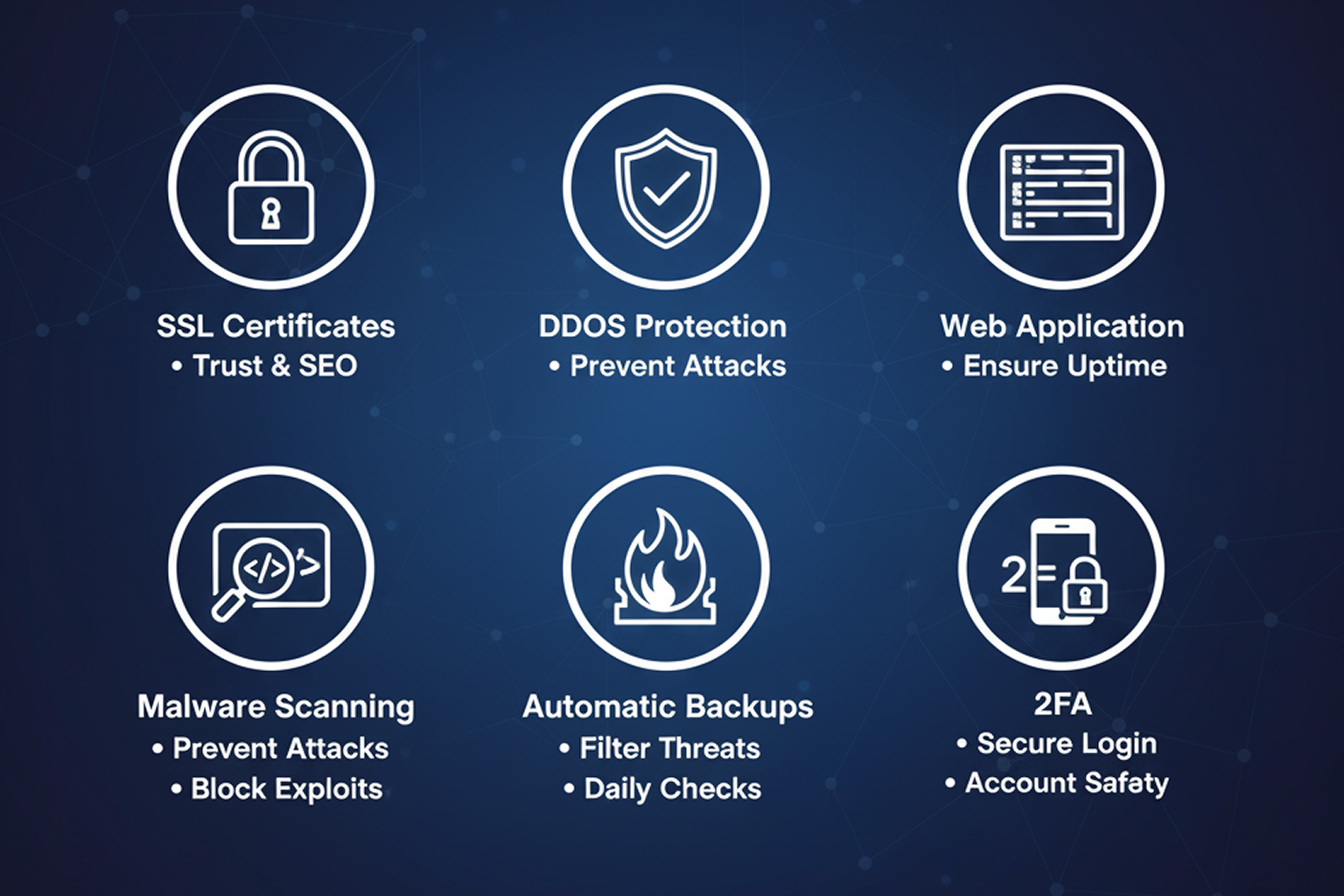
In today’s digital landscape, website security is more crucial than ever. Cyber threats are increasingly sophisticated, making it essential for businesses to choose a hosting provider that prioritizes security. Here are the top security features every hosting provider should offer to protect your website and its data.
1. SSL Certificates
Importance
SSL (Secure Socket Layer) certificates encrypt data transmitted between users and your website, ensuring that sensitive information, such as passwords and credit card details, remains secure.
Why It Matters
- Trust: Browsers display a padlock icon for secure sites, enhancing user trust.
- SEO Benefits: Search engines prioritize HTTPS sites in rankings.
2. Regular Backups
Importance
Regular backups are essential for recovering your website in case of data loss due to cyber attacks, server failures, or human errors.
Why It Matters
- Data Recovery: Quick restoration minimizes downtime and data loss.
- Peace of Mind: Knowing your data is safe allows you to focus on your business.
3. Firewalls
Importance
Firewalls act as barriers between your web server and potential threats, filtering incoming and outgoing traffic to block malicious activities.
Why It Matters
- Protection Against Attacks: Firewalls help defend against common threats like DDoS attacks and unauthorized access.
- Customizable Rules: Advanced firewalls allow customization to meet specific security needs.
4. DDoS Protection
Importance
Distributed Denial of Service (DDoS) attacks overwhelm your server with traffic, making your site unavailable to legitimate users.
Why It Matters
- Uptime Maintenance: DDoS protection ensures your website remains accessible during an attack.
- Mitigation Tools: Providers with DDoS protection often offer tools to analyze and mitigate attacks effectively.
5. Malware Scanning and Removal
Importance
Malware can compromise your website’s integrity and security, making it essential to have tools that detect and remove malicious software.
Why It Matters
- Proactive Defense: Regular scans help identify vulnerabilities before they can be exploited.
- Clean Recovery: Providers that offer malware removal services can quickly restore your site to a secure state.
6. Two-Factor Authentication (2FA)
Importance
Two-factor authentication adds an extra layer of security by requiring users to verify their identity through a second method, such as a text message or authentication app.
Why It Matters
- Enhanced Security: Even if a password is compromised, 2FA prevents unauthorized access.
- User Control: Users have more control over their accounts, making it harder for attackers to gain access.
7. Security Audits and Vulnerability Assessments
Importance
Regular security audits and vulnerability assessments help identify potential weaknesses in your hosting environment.
Why It Matters
- Proactive Measures: Identifying vulnerabilities allows you to address them before they can be exploited.
- Compliance: Many industries require regular audits for compliance with security standards.
8. Content Delivery Network (CDN)
Importance
A CDN distributes your website’s content across multiple servers worldwide, improving load times and providing an extra layer of security.
Why It Matters
- Traffic Distribution: CDNs can absorb traffic spikes from DDoS attacks.
- Improved Performance: Faster load times enhance user experience and SEO.
9. Automatic Software Updates
Importance
Keeping software up to date is vital for maintaining security and performance.
Why It Matters
- Patch Vulnerabilities: Regular updates fix known vulnerabilities, reducing the risk of exploitation.
- Ease of Management: Automatic updates reduce the burden on users to manually manage updates.
10. Customer Support and Incident Response
Importance
Responsive customer support is essential for addressing security issues promptly.
Why It Matters
- Quick Resolution: Fast support can help resolve security incidents before they escalate.
- Expert Guidance: Support teams can provide advice and assistance on security best practices.
Conclusion
When selecting a hosting provider, it’s essential to prioritize security features that will protect your website and its data. The right combination of SSL certificates, regular backups, firewalls, DDoS protection, and other security measures will help ensure your online presence remains secure and resilient against threats.
By choosing a hosting provider that excels in these areas, you can focus on growing your business with peace of mind, knowing that your website is in safe hands.
For more information, visit www.eirhost.com.
We compare the most popular web hosting providers to help you choose the best one.
Let's stay in touch

