
- Best hosts of 2025
- Reviews

- Website Builders
- Blog
PHP Versions, Node.js, and Hosting Performance – What to Know
 Team Webhosting Complex | October 9, 2025
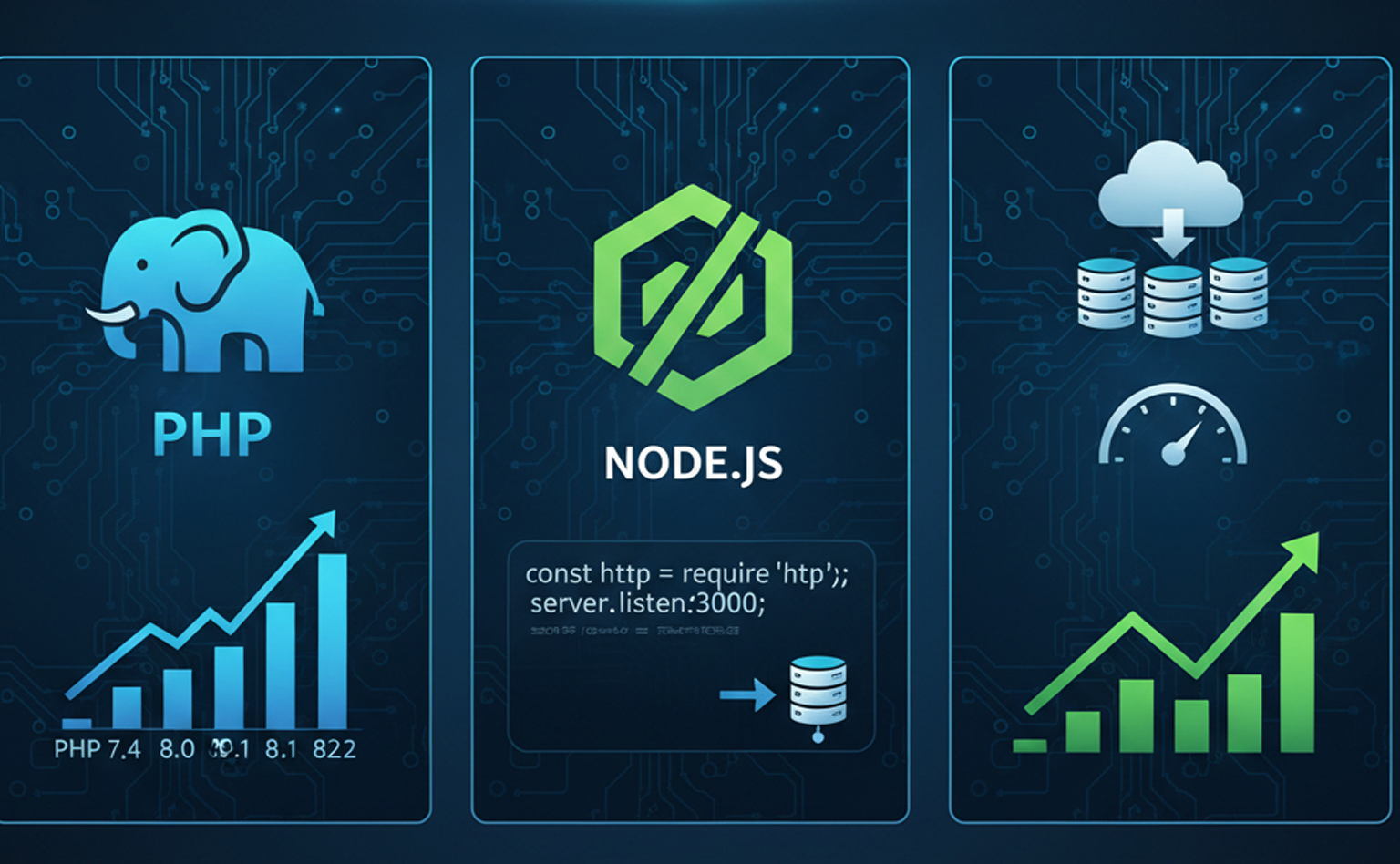
When it comes to hosting performance, the choice of programming language and its version can significantly impact the speed, reliability, and security of your website. This article explores the importance of PHP versions and Node.js in the context of hosting performance.
Understanding PHP Versions
PHP (Hypertext Preprocessor) is a popular server-side scripting language used to create dynamic web content. The version of PHP your website runs on can affect its performance in several ways:
- Speed Improvements: Each new PHP version generally includes performance enhancements. For instance, PHP 7 introduced significant speed improvements over PHP 5, making applications run faster and respond more efficiently to user requests.
- Security Features: Newer versions of PHP include critical security updates and patches. Running an outdated version can expose your site to vulnerabilities, making it essential to stay updated for both performance and security.
- Compatibility with Frameworks: Many modern web frameworks and content management systems (CMS) require specific PHP versions to function optimally. Using the recommended version ensures better compatibility and reduces the likelihood of errors.
Node.js and Its Role
Node.js is a JavaScript runtime that enables the execution of JavaScript code server-side. It’s particularly known for its non-blocking, event-driven architecture, making it ideal for applications that require high concurrency.
- Asynchronous Processing: Node.js excels in handling multiple requests simultaneously without blocking the execution thread. This leads to faster response times, especially for I/O-heavy applications, such as real-time chat applications or streaming services.
- Single Language Stack: With Node.js, developers can use JavaScript for both client-side and server-side programming, streamlining development and reducing context-switching. This can lead to faster development cycles and improved overall performance.
- Microservices Architecture: Node.js is often used in microservices architectures, where applications are broken down into smaller, manageable services. This can enhance scalability and performance, as each service can be optimized independently.
Hosting Considerations
When selecting a hosting provider, consider the following:
- Support for Latest Versions: Ensure that your hosting environment supports the latest stable versions of PHP and Node.js. This allows you to benefit from performance improvements and security updates.
- Optimized Server Configuration: Some hosting providers offer configurations optimized for specific technologies. Look for options that provide pre-configured environments for PHP or Node.js to maximize performance.
- Scalability Options: Choose a hosting plan that allows for easy scaling as your application grows. This is particularly important for Node.js applications that may experience fluctuating traffic levels.
Conclusion
The choice of PHP version and the use of Node.js can significantly influence your website’s performance. Staying updated with the latest PHP versions enhances speed and security, while Node.js offers unique advantages for real-time applications. When selecting a hosting provider, prioritize support for these technologies to ensure optimal performance and growth for your web applications. By understanding and leveraging these factors, you can create a more efficient and responsive online experience.
We compare the most popular web hosting providers to help you choose the best one.
Let's stay in touch

